(January-June 2025): Large scale educational reforms and policies
Vol. 20 No. 1 (2025)
(January-June 2024): Teacher training
Vol. 19 No. 1 (2024)
(January-June 2023): Responses of Educational Institutions to Technology Addiction.
Vol. 18 No. 1 (2023)
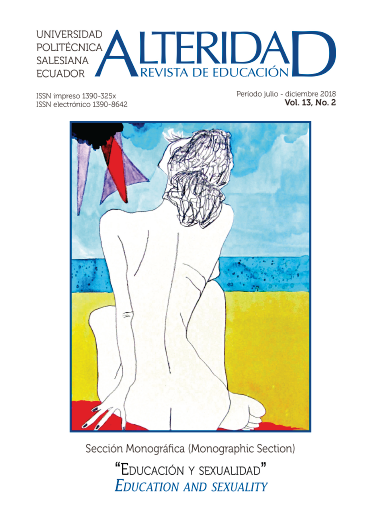
(July-December 2018): Education & Sexuality
Vol. 13 No. 2
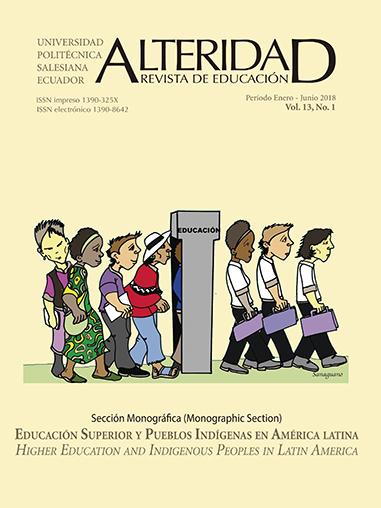
(january-june 2018): Higher Education and Indigenous Peoples in Latin America
Vol. 13 No. 1
En el caso particular de los pueblos indígenas, su historia ha estado marcada por intensos procesos de imposición y resistencia, dentro de los cuales las políticas llamadas indigenistas han sido centrales. Un ejemplo significativo han sido aquellas que han mantenido las relaciones coloniales al interior de los Estados nacionales latinoamericanos, utilizando a los sistemas educativos como una de sus herramientas fundamentales. En respuesta a ellas, los pueblos indígenas promovieron cambios importantes en la impronta educativa, especialmente durante el siglo XX, dando origen a diversas modalidades como la de educación indígena, educación bilingüe, educación bilingüe bicultural y, más recientemente, educación intercultural.
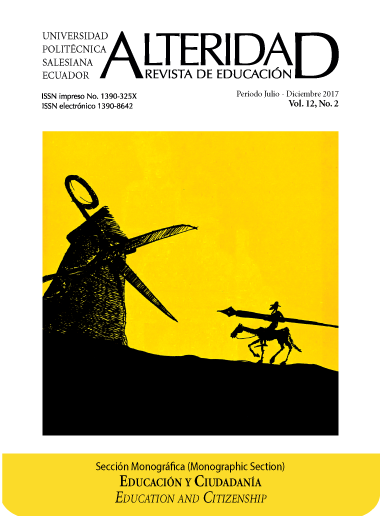
(july-december 2017): Education & Citizenship
Vol. 12 No. 2
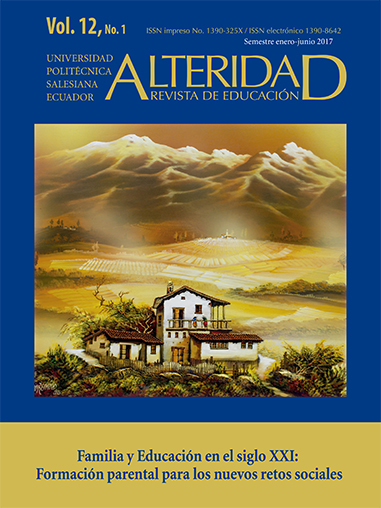
(January-June 2017) Family and Education in the 21st Century: Parental Training for New Social Challenges
Vol. 12 No. 1
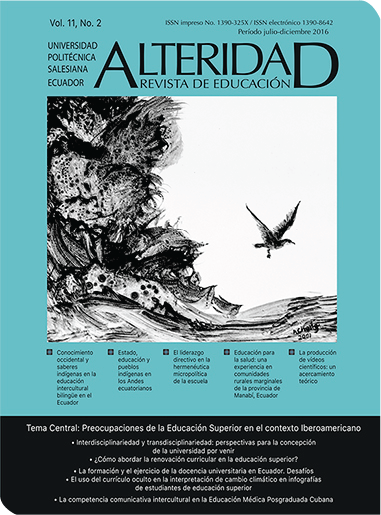
(july-december 2016) Concerns of Higher Education in the Ibero-American context
Vol. 11 No. 2
Current society, both in the world and in the Ibero-American context, poses several and multiple challenges to higher education. Among others, although there have been transformations such as the expansion of enrollment, the issue of equity in access remains latent; Although the percentage of researchers and professors with an equivalent doctor degree has increased, not all Ibero-American university teachers are characterized by having the relevant training; And as universities do not have efficient programs, the expansion of coverage becomes fictitious if the percentage of graduates is analyzed.
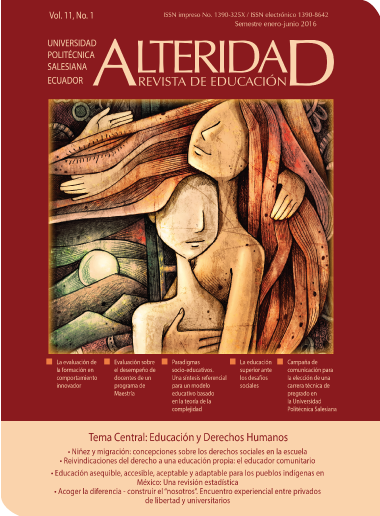
(January-June 2016) Education and Human Rights
Vol. 11 No. 1
Education is recognized for the first time as a human right (inherent to every human being, equal for all and universal) in the Universal Declaration of Human Rights of the United Nations adopted in 1948 after the Second World War. Education as a human right is part of the second phase of human rights that includes economic, social and cultural rights. (The first phase was the political and civil rights that were declared at the end of the 18th century under the influence of enlightened thought. Economic, social and cultural rights were originally promoted by socialist countries and by supporters of the welfare state.
Article 26 of the Universal Declaration of Human Rights establishes that everyone has the right to education and that it must be free and compulsory at least in the initial stages of education. Secondary, technical and vocational education should be generally accessible and higher education should be accessible to all on the basis of merit. Article 26 also states that education should promote the development of human personality and strengthen respect for human rights and freedoms. It should also promote understanding, tolerance and friendship among nations and racial and religious groups.
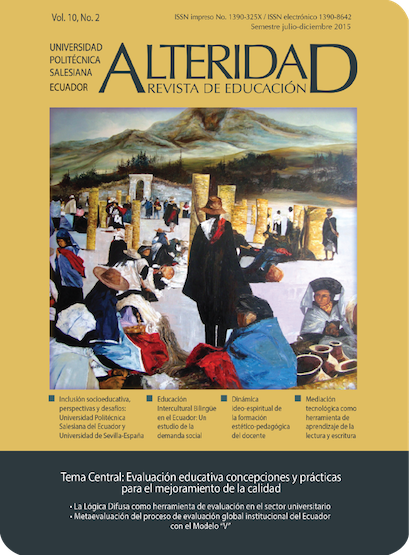
(July-December 2015) Educational evaluation, conceptions and practices for quality improvement
Vol. 10 No. 2