

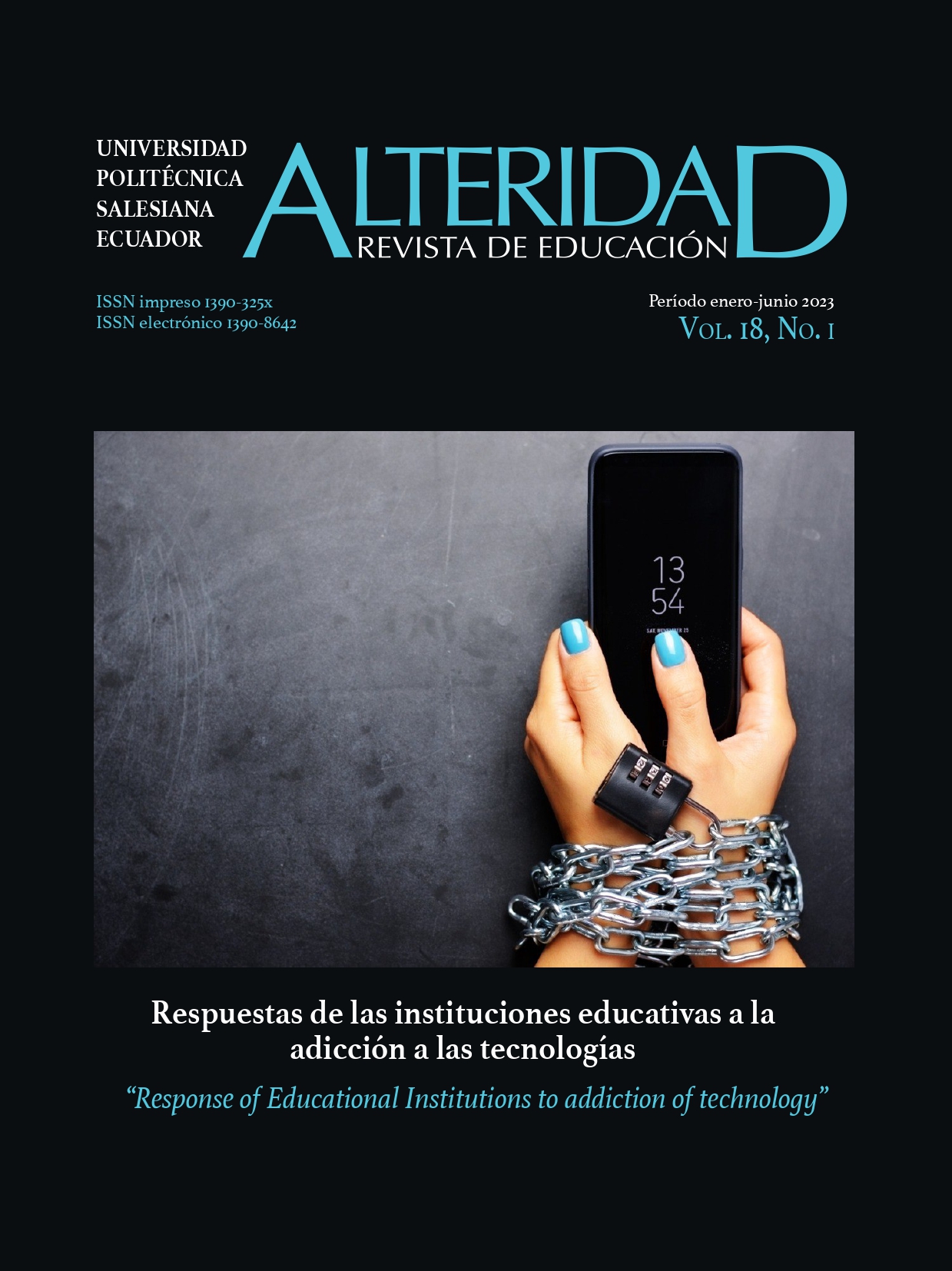
ICT addiction. Teaching perspective from three university centers
Article Sidebar
Main Article Content
Abstract
Within the analyses made with reference to the use and abuse of Information and Communication Technologies, there are several research applied to young people, since they are the group that most concentrates online consumption. However, little has been analyzed about the trends and reflections made in this regard by another population sector, not always different in age, but in their purposes and daily activities: teachers. As part of this work, a study with teachers from three colleges of the University of Guadalajara is shown, who offer their perception of consumption on the web based on the Internet Addiction Test developed by Kimberly Young. The results show, in general, a rational tendency in the use of technology, although there are some frequent indications in the case of the loss of awareness of the time of Internet use, to feel a certain degree of anxiety or nervousness when not connected or to consult social networks or mail before starting priority activities. This work reaffirms the need to deepen studies on the group of teachers of the study centers, since both their personal and professional affectation is of interest, as well as the role that technology plays for them and what message they give to the student communities they serve.
Article Details

This work is licensed under a Creative Commons Attribution-NonCommercial-ShareAlike 4.0 International License.
Authorship: The list of authors signing must include only those people who have contributed intellectually to the development of the work. Collaboration in the collection of data is not, by itself, a sufficient criterion of authorship. "Alteridad" declines any responsibility for possible conflicts arising from the authorship of the works that are published.Copyright: The Salesian Polytechnic University preserves the copyrights of the published articles, and favors and allows their reuse under the Creative Commons Attribution-NonCommercial-ShareAlike 3.0 Ecuador license. They may be copied, used, disseminated, transmitted and publicly displayed, provided that: i) the authorship and the original source of their publication (journal, editorial and work URL) are cited; (Ii) are not used for commercial purposes; Iii) mention the existence and specifications of this license.
References
Álvarez Flores, E. (2021). Uso crítico y seguro de tecnologías digitales de profesores Universitarios. Formación Universitaria, 14(1), 33-44. https://bit.ly/3RmpXr4
Álvarez Portela, D. R. y Fernández Castillo, E. (2019). Propiedades psicométricas de la versión adaptada del internet addiction test. Salud & Sociedad, 10(2), 174-185. https://doi.org/10.22199/issn.0718-7475-2019-02-007
Asociación de Internet Mx. (2022). 18° Estudio sobre los Hábitos de Personas Usuarias de Internet en México 2022. https://bit.ly/3rbdY5g
Avalos, L. (2017). Historia de la ciencia y su tecnología. Publicaciones Escolares Edición MAGISTERIO, San José Costa Rica.
Cabero Almenara, J., Martínez,S., Valencia-Ortiz, R., Leiva, J., Orellana, M. L. y Harvey-López, I. (2019). La adicción de los estudiantes a las redes sociales on-line: un estudio en el contexto latinoamericano. Revista Complutense de Educación, 24(4), 1-12. https://doi.org/10.5209/rced.61722
Castells, M. (2001). La galaxia Internet. Areté.
De Lima, M. R. y Moreira de Andrade, I. (2019). Significaciones docentes sobre la integración de tecnologías digitales en prácticas pedagógicas. Alteridad, 14(1), 12-25. https://doi.org/10.17163.alt.v14n1.2019.01
Echeburúa, E. y De Corral, P. (2010). Adicción a las nuevas tecnologías y a las redes sociales en jóvenes: un nuevo reto. Revista Adicciones, 22(2), 91-95. Sociedad Científica Española de Estudios sobre el Alcohol, el Alcoholismo y las otras Toxicomanías. Palma de Mallorca, España.
García, B. C., López de Ayala-López, M. C. y Martínez Pastor, E. (2019). Usos comunicativos de las nuevas tecnologías entre los menores. Percepción de sus profesores sobre oportunidades y riesgos digitales. Mediaciones Sociales (18), 43-57. https://bit.ly/3ref7ZL
González Amarilla, S. B., y Pérez Vargas, S. F. (2019). Tecnoestrés docente: el lado opuesto de la utilización de las nuevas tecnologías por los docentes del nivel medio. Revista Científica Estudios e Investigaciones, 8(1), 21-35. https://doi.org/10.26885/rcei.8.1.21
Hernández, R. M., Orrego, R. y Quiñones, S. (2018). Nuevas formas de aprender: La formación docente en el uso de las TIC. Propósitos y Representaciones, 6(2), 671-701. http://dx.doi.org/10.20511/pyr2018.v6n2.248
López Barbosa, R. R., Guízar, A. D. y Santa Ana Escobar, M. B. (2019). Aceptación, estrés y adicción por el uso de las Tecnologías de Información y Comunicaciones en la educación profesional. En J. C. Neri Guzmán, R. López y B. O. Ríos Velázquez (2019), El uso de las Tecnologías de la Información y Comunicación en el desempeño de jóvenes universitarios (25-56). https://bit.ly/3dSmIdp
Magaña, C. (14 de mayo de 2021). Las y los maestros: INEGI presenta datos sobre la docencia. México Social. https://bit.ly/3CdEst8
Maldonado, M. E (2018). El aula, espacio propicio para el fortalecimiento de competencias ciudadanas y tecnológicas. Sophia, 14(1), 39-50. https://doi.org/10.18634/sophiaj.14v.1i.822
Moreno López, N., González Robles, A., Torres Gómez, A., y Araya Hernández, J. (2017). Alfabetización digital a padres de familia en el uso de las redes sociales. Alteridad, 12(1), 8-19. https://bit.ly/3HHZYJu
Otzen, T. y Manterola, C. (2017). Técnicas de muestreo sobre una población a estudio. International Journal of Morphology, 35(1), 227-232. https://bit.ly/2Iub2Za
Preciado, J. V. (2010). Introducción a la informática educativa. Colecciones Escolares UNED, San José Costa Rica.
Prieto Quezada. M. T. y Romero Sánchez, A. L. (2020). Violencia online en jóvenes de un bachillerato de México. Revista. Espacios, 42(03). https://bit.ly/3Wtv4sN
Rojas Díaz, J. S. y Yepes Londoño, J. J. (2022). Panorama de riesgos por el uso de la tecnología en América Latina. Trilogía Ciencia Tecnología Sociedad, 14(26), 1-40. https://doi.org/10.22430/21457778.2020
Sánchez-Carbonell, X., Beranuy, M., Castellana, M., Chamarro, A. y Oberst, U. (2008). La adicción a Internet y al móvil: ¿moda o trastorno? Revista Adicciones, 20, 149-160. https://cutt.ly/90PGjjQ
Valencia-Ortiz, R., Cabero-Almenara, J. y Garay Ruiz, U. (2021). Adicción a las redes sociales en estudiantes mexicanos: percepciones de discentes y docentes. Tecnología, Ciencia y Educación, 19, 103-122. https://doi.org/10.51302/tce.2021.616
Waliño Guerrero, M. J., Pardo Baldoví, M. I. y San Martín Alonso, A. (2019). Formación del profesorado para la ciudadanía digital. XXVI edición de las Jornadas Universitarias de Tecnología Educativa. https://bit.ly/3BOgseN
Young, K. (1996). Psychology of computer use: addictive use of the Internet: a case that breaks the stereotype. Psychological Reports, 79, 889-902. http://dx.doi.org/10.2466/pr0.1996.79.3.899
Young, K. (1999). Internet Addiction: Symptoms, Evaluation, And Treatment. L. Van de Creek y T. L. Jackson (eds.), Innovations in Clinical Practice, 17. https://bit.ly/3unIsm5