

Satisfaction in a Spanish international and interdisciplinary doctoral studies: the impact of motivation, critical thinking,and academic engagement
Article Sidebar
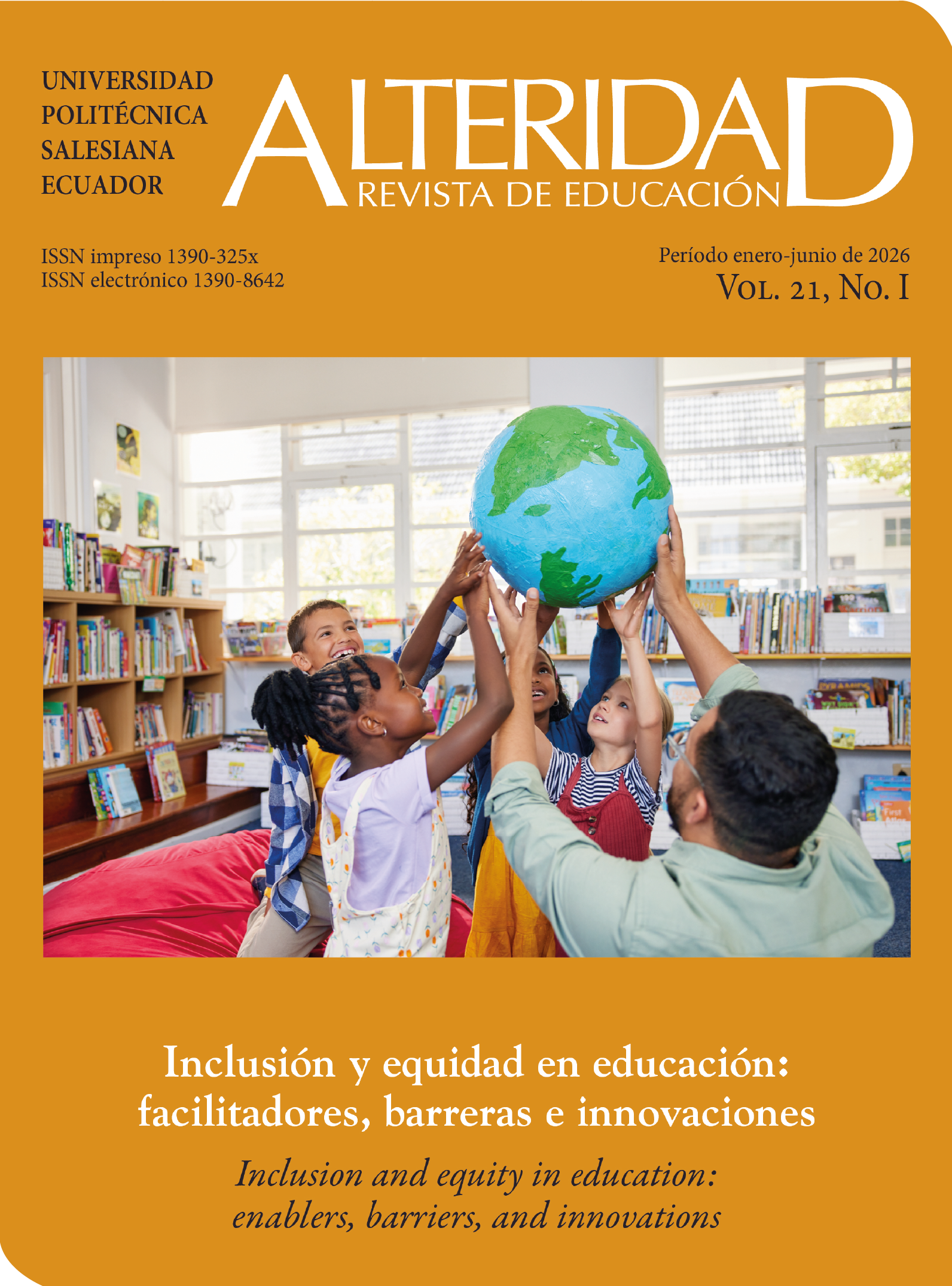
Main Article Content
Abstract
This paper explores the factors that affect the satisfaction of
doctoral students, making a special emphasis and focus on subjective
variables such as motivation, critical thinking and academic
engagement, aspects that have been scarcely addressed in
previous literature. In the context of the growing significance of
doctoral studies for academic and institutional development, this
study aims to identify the motivations underlying the pursuit and
choice of a doctoral program and the different types of critical
thinking that students possess. Additionally, it seeks to explore
how these factors interact with each other and how they impact
the academic experience of doctoral students in a differentiated
way. The research was conducted at a public Spanish university
using a mixed-method approach that included semi-structured
interviews and surveys administered to doctoral students. The
findings reveal that learning motivation and academic engagement
are crucial determinants of students’ satisfaction with their
doctoral studies. Furthermore, and while most critical thinking
dimensions do not have a direct impact on the doctoral student’s
satisfaction, perceived utility does exert a notable effect on satisfaction.
Results provide valuable practical implications for doctoral
program managers, who may implement strategies to enhance
students’ experience, thereby contributing to the improvement of
doctoral training.
Article Details

This work is licensed under a Creative Commons Attribution-NonCommercial-ShareAlike 4.0 International License.
Authorship: The list of authors signing must include only those people who have contributed intellectually to the development of the work. Collaboration in the collection of data is not, by itself, a sufficient criterion of authorship. "Alteridad" declines any responsibility for possible conflicts arising from the authorship of the works that are published.Copyright: The Salesian Polytechnic University preserves the copyrights of the published articles, and favors and allows their reuse under the Creative Commons Attribution-NonCommercial-ShareAlike 3.0 Ecuador license. They may be copied, used, disseminated, transmitted and publicly displayed, provided that: i) the authorship and the original source of their publication (journal, editorial and work URL) are cited; (Ii) are not used for commercial purposes; Iii) mention the existence and specifications of this license.
References
Astin, A.W. (1993). What matters in College? Four critical years revisited. The Journal of Higher Education, 22, 74-75. https://doi.org/10.2307/1176821
Barnes, B. J. y Randall, J. (2012). Doctoral student satisfaction: An examination of disciplinary, enrollment, and institutional differences. Research in Higher Education, 53, 47-75. https://doi.org/10.1007/s11162-011-9225-4
Barrientos de Bojórquez, N. A. (2024). Incrementar la innovación educativa en el nivel superior a través del engagement académico. Revista Científica Avances en Ciencia y Docencia, 1(2), 21-31. https://doi.org/10.70939/revistadiged.v1i2.8
Berrio-Calle, J. E., Valencia-Arias, A., Vélez-Holguín, R. M. y Arango-Botero, D. (2022). Motivación para realizar estudios de posgrado: Un modelo de probabilidad. Formación Universitaria, 15(5), 27-36. http://dx.doi.org/10.4067/S0718-50062022000500027
Bolliger, D. U. y Halupa, C. (2012). Student perceptions of satisfaction and anxiety in an online doctoral program. Distance Education, 33(1), 81-98. https://doi.org/10.1080/01587919.2012.667961
Braun, V. y Clarke, V. (2006). Using thematic analysis in psychology. Qualitative Research in Psychology, 3(2), 77-101. https://doi.org/10.1191/1478088706qp063oa
Cavazos Arroyo, J. y Encinas Orozco, J. C. (2016). Influencia del engagement académico en la lealtad de estudiantes de posgrado: Un abordaje a través de un modelo de ecuaciones estructurales. Estudios Gerenciales, 32, 228-238. https://doi.org/10.1016/j.estger.2016.07.001
Cheng, M., Taylor, J., Williams, J. y Tong, K. (2016). Student satisfaction and perceptions of quality: Testing the linkages for PhD students. Higher Education Research & Development, 35(6), 1153-1166. https://doi.org/10.1080/07294360.2016.1160873
Coelho-Martinho, R. y Conde-Pérez, J. (2013). Repercusión de la ansiedad sobre el engagement en estudiantes de enfermería. Agora de Enfermería, 17(3), 120-127.
Cohen, L., Manion, L. y Morrison, K. (2018). Research methods in education (8th ed.). Routledge.
De Clercq, M., Frenay, M., Azzi, A., Klein, O. y Galand, B. (2021). All you need is self-determination: Investigation of PhD students’ motivation profiles and their impact on the doctoral completion process. International Journal of Doctoral Studies, 16, 189-209. https://doi.org/10.28945/4702
De la Vega, L. F. (2024). ¿Cuáles son las características de un programa de doctorado de calidad? Una revisión sistemática de la literatura. European Public & Social Innovation Review, 9, 118. https://doi.org/10.31637/epsir-2024-1664
Deci, E. L y Ryan, R. M. (2000). Self- determination theory and the facilitation of intrinsic motivation, social development and well-being. American Psychologits, 68-78. https://doi.org/10.1037/0003-066X.55.1.68
Dericks, G., Thompson, E., Roberts, M. y Phua, F. (2019). Determinants of PhD student satisfaction: The roles of supervisor, department, and peer qualities. Assessment & Evaluation in Higher Education, 44(7), 1053-1068. https://doi.org/10.1080/02602938.2019.1570484
Fabara, E. (2012). La formación de Posgrado en Educación en el Ecuador. Alteridad. Revista de Educación, 7(2), 92-105.
Groccia, J.E. (2018), What Is Student Engagement? Teaching and Learning, 154, 11-20. https://doi.org/10.1002/tl.20287
Herzberg, F. (1954). Work and the Nature of Man. The World of Publishing Company, 71-91.
Hair, J. F., Hult, G. T. M., Ringle, C. y Sarstedt, M. (2017). A primer on partial least squares structural equation modeling (PLS-SEM) (2ª ed.). Sage Publications.
Hamui-Sutton, A. (2013). Un acercamiento a los métodos mixtos de investigación en educación médica. Inv Ed Med, 2(8), 211-216.
Katz, E., Blumler, J. G. y Gurevitch, M. (1973). Uses and Gratifications Research. The Public Opinion Quarterly, 37(4), 509-523. https://doi.org/10.1086/268109
Kobylarek, A., Błaszczyński, K., Ślósarz, L. y Madej, M. (2022). Critical Thinking Questionnaire (CThQ) -construction and application of critical thinking test tool. Andragogy Adult Education and Social Marketing. http://dx.doi.org/10.15503/andr2022.1
Korobova, N. y Starobin, S. S. (2015). A comparative study of student engagement, satisfaction, and academic success among international students. Journal of International Students, 5(1), 72-85. https://doi.org/10.32674/jis.v5i1.444
Lawson, M. y Lawson, H. A. (2013). New conceptual frameworks for student engagement. Review of Educational Research, 83(3), 432-479. https://doi.org/10.3102/0034654313480891
Lent, R., Singley, D., Sheu, H., Schmidt, J. y Schmidt, L. (2007). Relation of social-cognitive factors to academic satisfaction in engineering students. Journal of Career Assessment, 15, 87-97. https://doi.org/10.1177/1069072706294518
Mason, M. M. (2012). Motivation, satisfaction, and innate psychological needs. International Journal of Doctoral Studies, 7, 259-277. https://doi.org/10.28945/1596
Maslow, A. H. (1954). Motivation and Personality. Harper & Row Publishers.
McClelland, D. C. (1961). The Achieving Society. Van Nostrand.
Mueller, E. F., Flickinger, M. y Dorner, V. (2015). Knowledge junkies or career builders? A mixed-methods approach to exploring the determinants of students' intention to earn a PhD. Journal of Vocational Behavior, 90, 75-89 https://doi.org/10.1016/j.jvb.2015.07.001
Murphy, P. K., Kim, T., Joy, E. E., Shein, B. y Allan, B. A. (2025). Social mobility through doctoral education: Exploring identity, classism, and belongingness. Journal of Diversity in Higher Education, 18(1), 16-24. https://doi.org/10.1037/dhe0000477
Nogueira, M. J., Antunes, J. y Sequeira, C. (2019). Development and psychometric study of the academic life satisfaction scale (ALSS) in a higher education students’ sample. Nursing and Health Care International Journal, 3(2). http://dx.doi.org/10.23880/NHIJ-16000183
Perales-Mejía, F. de J. (2020). Estudio de egresados en un programa de posgrado en educación. Alteridad, 15(2), 256-269. https://doi.org/10.17163/alt.v15n2.2020.09
Pinto Zipp, G. y Olson, V. (2008). Infusing the mentorship model of education for the promotion of critical thinking in doctoral education. Journal of College Teaching & Learning, 5(9), 29-36. https://doi.org/10.19030/tlc.v5i9.1229
Portalanza, A., Grueso-Hinestroza, M. P. y Duque, E. (2017). Propiedades de la Utrecht Work Engagement Scale UWES-S 9: Análisis exploratorio con estudiantes en Ecuador. Innovar. Revista de Ciencias Administrativas y Sociales, 27(64), 145-156. https://doi.org/10.15446/innovar.v27n64.62374
Renata, R., Wardiah, D. y Kristiawan, M. (2018). The influence of headmaster’s supervision and achievement motivation on effective teachers. International Journal of Scientific & Technology Research, 7(4), 44-49.
Richard, P. y Elder, L. (2011). Critical thinking: Tools for taking charge of your learning and your life (3rd ed.). Financial Times Prentice Hall.
Ruggiero, T. E. (2000). Uses and gratifications theory in the 21st Century. Mass Communication & Society, 3, 3-37. https://doi.org/10.1207/S15327825MCS0301_02
Stubb, J., Pyhältö, K. y Lonka, K. (2011). Balancing between inspiration and exhaustion: PhD students’ experienced socio-psychological well-being. Studies in Continuing Education, 33(1), 33–50. https://doi.org/10.1080/0158037X.2010.515572
Vallerand, R. J., Pelletier, L. G., Blais, M. R., Brière, N. M., Senécal, C. y Vallières, E. F. (1992). The Academic Motivation Scale: A measure of intrinsic, extrinsic, and amotivation in education. Educational and Psychological Measurement, 52(4), 1003-1017. https://doi.org/10.1177/0013164492052004025
Vendrell-Morancho, M., Rodríguez-Mantilla, J. M. y Fernández-Díaz, M. J. (2024). Predictores del Pensamiento Crítico en Estudiantes Universitarios Españoles. REICE. Revista Iberoamericana sobre Calidad, Eficacia y Cambio en Educación, 22(3), 23-45. https://doi.org/10.15366/reice2024.22.3.002
Vergara-Morales, J., Del Valle, M., Díaz, A. y Pérez, M. V. (2018). Adaptación de la escala de satisfacción académica en estudiantes universitarios chilenos. Psicología Educativa, 24, 99-106. https://doi.org/10.5093/psed2018a15
Yeh, Y. S. y Li, Y. M. (2009). Building trust in m‐commerce: Contributions from quality and satisfaction. Online Information Review, 33(6), 1066-1086. https://doi.org/10.1108/14684520911011016
Zhao, C. M., Golde, C. M. y McCormick, A. C. (2007). More than a signature: How advisor choice and advisor behaviour affect doctoral student satisfaction. Journal of Further and Higher Education, 31(3), 263-281. https://doi.org/10.1080/03098770701424983
Zipp, G. y Olson, V. (2022). Infusing the mentorship model of education for the promotion of critical thinking in doctoral education. Journal of College Learning & Teaching Learning, 5(9), 0-16. https://doi.org/10.19030/tlc.v5i9.1229
Zumárraga-Espinosa, M. y Cevallos-Pozo, G. (2022). Autoeficacia, procrastinación y rendimiento académico en estudiantes universitarios de Ecuador. Alteridad, 17(2), 277-290. https://doi.org/10.17163/alt.v17n2.2022.08